
Ingrown nails
For painful ingrown nails, assess growth direction and surrounding skin. A clinician can determine whether correction or other care is appropriate.
Have you noticed these changes?
Review pain when walking or pressing and recurring inflammation around the nail.

Pain when walking or pressing
The nail edge can cause pain by repeatedly irritating nearby skin.

Swelling and recurring inflammation
We check for swelling, redness and recurring inflammation around the nail.
Similar symptoms can have different causes
We consider repeated pressure or injury, nail shape and possible fungal infection. Appearance alone does not determine treatment.
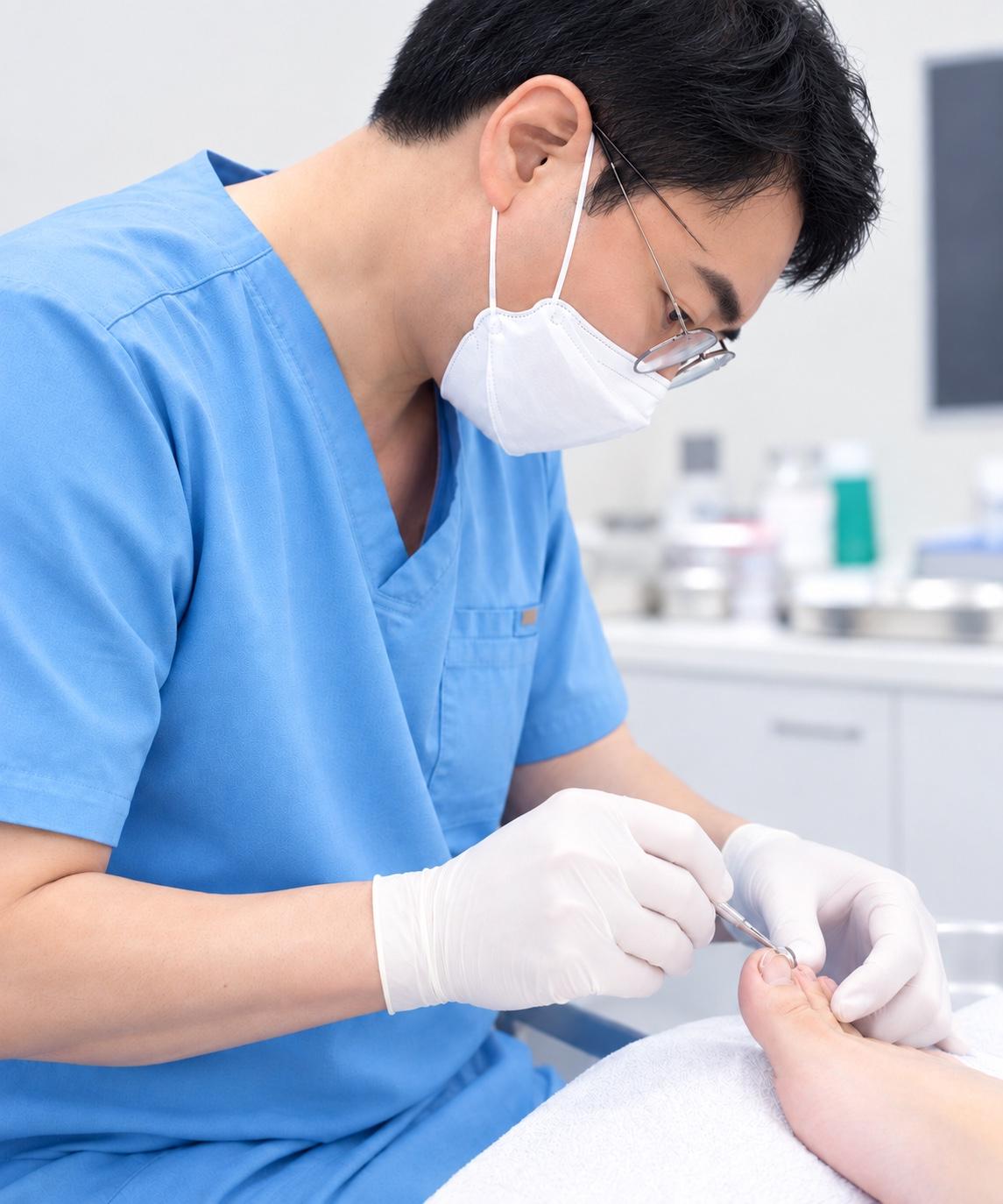
Nail clinic care
From assessment to ongoing care
Examine the nail edge and skin before discussing care and trimming.
- 1
Examine the nail and skin
We assess colour, thickness, shape and pain or inflammation around the nail.
- 2
Assess possible causes
We consider fungal infection, ingrown nails, repeated pressure, injury and grooming habits.
- 3
Tests when indicated
Tests for fungal infection may be considered when a fungal nail infection is suspected.
- 4
Plan individual care
Treatment and care are selected according to the diagnosis, symptoms and general health.
- 5
Care and recurrence prevention
We explain nail trimming, footwear and foot hygiene.
Caring for ingrown toenails
Caring for an ingrown toenail early helps keep it from getting worse and supports recovery to healthy, comfortable feet.
- 1
Care when there is inflammation or pain
If there is inflammation or pain, it is important to disinfect first, apply ointment and take the prescribed medication to relieve symptoms.
- 2
Trim toenails correctly
Do not cut toenails too short; trim them straight and flat so they do not become ingrown. Avoid sharp tools and use proper nail care tools.
- 3
Do not force a cut
Cutting toenails too short or digging deeply into the sides can make the nail grow into the skin and cause pain and inflammation. Always manage it safely with professional advice.
- 4
Keep feet clean and dry
After washing, dry the nails and surrounding skin thoroughly, and avoid shoes or socks that trap sweat.
Ingrown toenail correction photos
Results may vary from person to person.
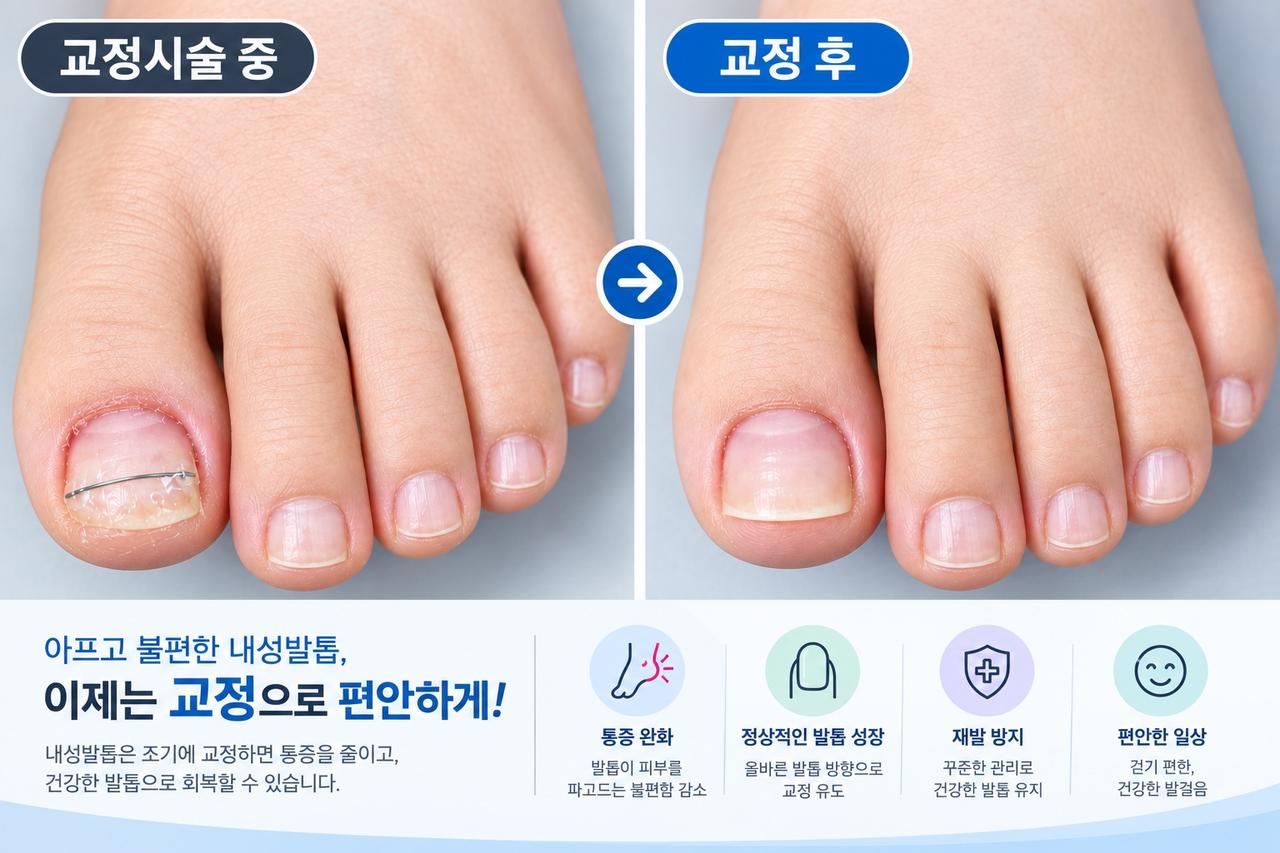
Ingrown toenail during and after correction
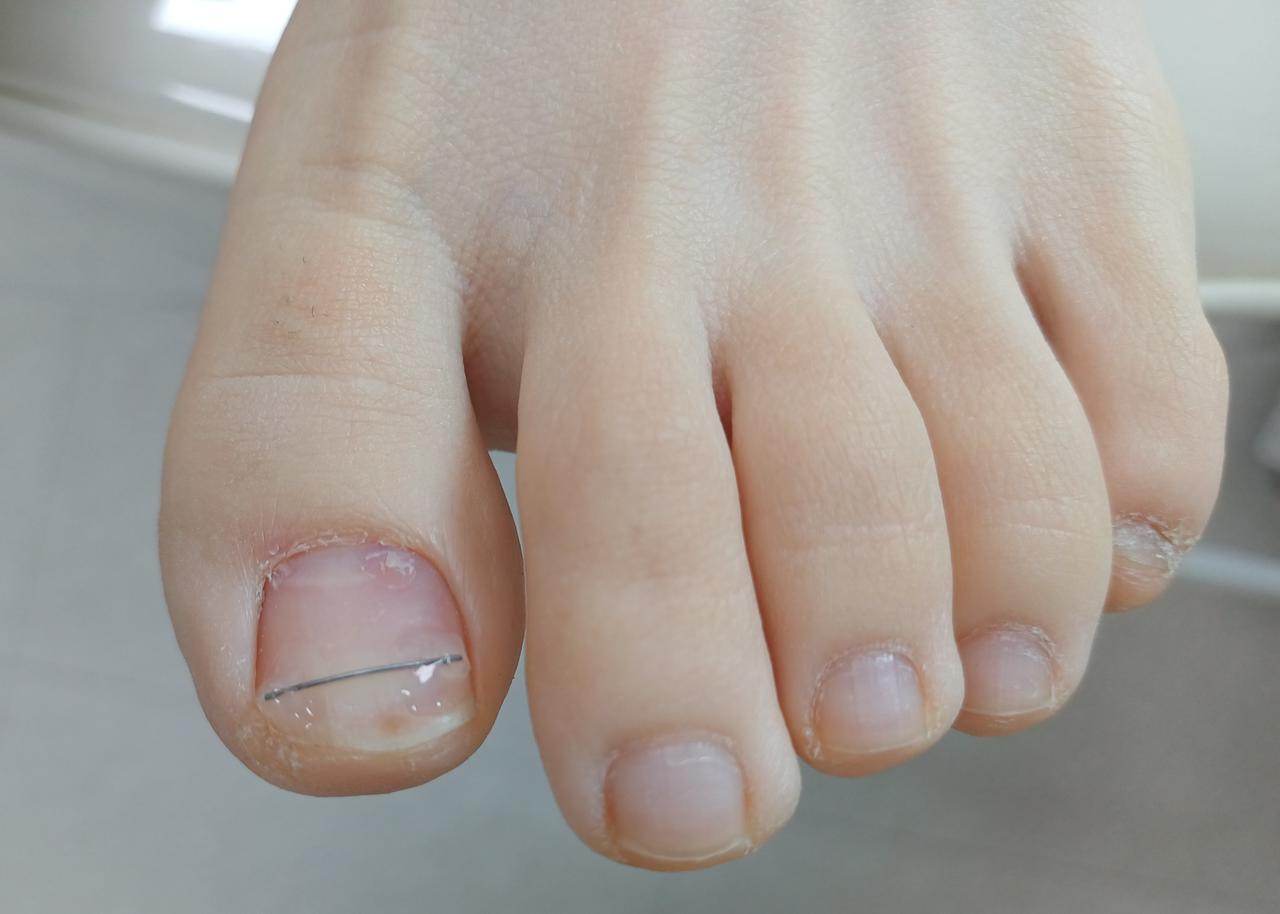
Ingrown toenail with a brace applied
FAQ
Why do ingrown toenails happen?
They occur when the nail edge presses on or digs into the surrounding skin. Nail shape, cutting the sides too deeply, narrow-toed shoes and repeated pressure can all contribute. It helps to review the habits behind it as well.
Does an ingrown toenail always need to be removed?
Not every ingrown toenail needs nail removal. Depending on severity, care to reduce pressure or conservative treatment is considered. If inflammation is severe or keeps coming back, a procedure to remove the problem part of the nail may be needed.
What does an ingrown toenail brace do?
A brace applies force to the curved nail to reduce the pressure of its edge on the skin. Whether it can be used depends on the nail's thickness and shape and the condition of the skin. It is not suitable for every ingrown toenail and is decided after examination.
Is ingrown toenail treatment very painful?
It depends on the degree of inflammation and the method. An already swollen, sensitive area may hurt with light touch. Local anaesthesia may be used for procedures such as removing part of the nail, and we explain the expected pain and aftercare before treatment.
Can a treated ingrown toenail come back?
Yes, it can. Not only the nail's shape but also cutting habits and shoe pressure can continue to play a role. If pain and inflammation keep returning in the same place, we review the course of previous treatment and assess whether another method is needed.
Related care information
Continue to ingrown nail care and related nail guidance.

Nail clinic overview
We distinguish ingrown nails, thickening or discoloration, and recurrent inflammation before discussing care.

Nail treatment
Care proceeds through examination, cause assessment, indicated testing, individual treatment, and recurrence prevention

Nail FAQ
Not every thick nail is fungal, and an ingrown nail does not always require removal
Discuss the approach that fits your condition
Discuss the potential benefits and limitations before deciding on a care plan.
When it hurts, Dr. Anapa
Face or pain, we start by finding out why. Book by phone or online.