
Fungal nail infection
Not every yellow or thickened nail is fungal. Confirm the cause and nail condition before discussing an appropriate treatment option.
Have you noticed these changes?
Review nail color, thickness and surface along with the surrounding skin.

Discolouration and thickening
We assess yellow or brown discolouration and increased thickness.

Crumbling and a rough surface
The nail tip may crumble and its surface or shape may change.

Fungal infection of the foot skin
We also assess whether the skin of the foot is affected.
Similar symptoms can have different causes
We consider repeated pressure or injury, nail shape and possible fungal infection. Appearance alone does not determine treatment.
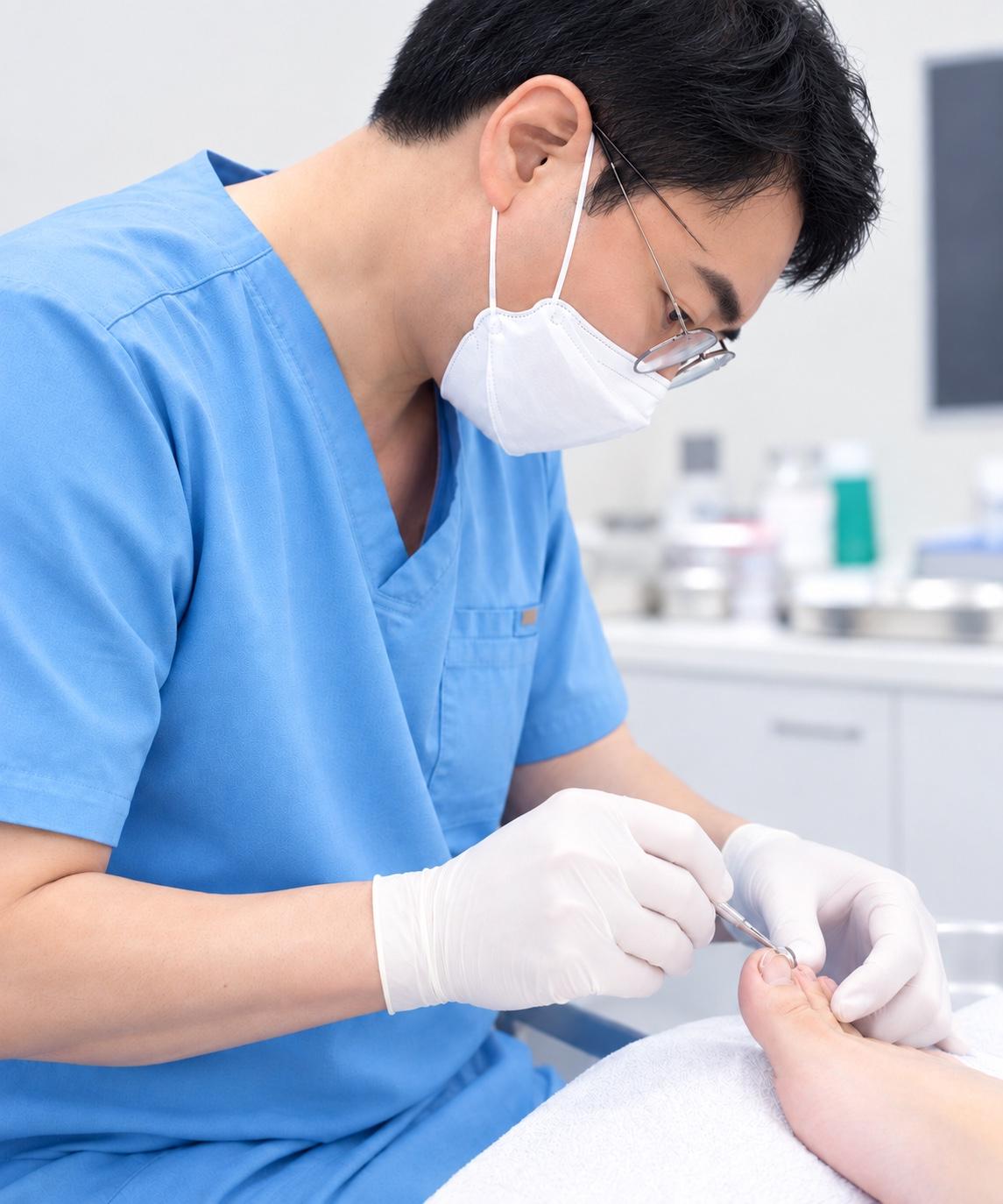
Nail clinic care
From assessment to ongoing care
Avoid judging by appearance alone; discuss fungal testing and care options.
- 1
Examine the nail and skin
We assess colour, thickness, shape and pain or inflammation around the nail.
- 2
Assess possible causes
We consider fungal infection, ingrown nails, repeated pressure, injury and grooming habits.
- 3
Tests when indicated
Tests for fungal infection may be considered when a fungal nail infection is suspected.
- 4
Plan individual care
Treatment and care are selected according to the diagnosis, symptoms and general health.
- 5
Care and recurrence prevention
We explain nail trimming, footwear and foot hygiene.
Treatment and nail regrowth follow different timelines
Treating the infection does not immediately restore a deformed nail. Visible change takes time as new nail grows, and progress varies.
Onycho laser
Check whether a thickened or discolored nail has a fungal infection. Discuss whether Onycho laser is suitable and what other options exist.
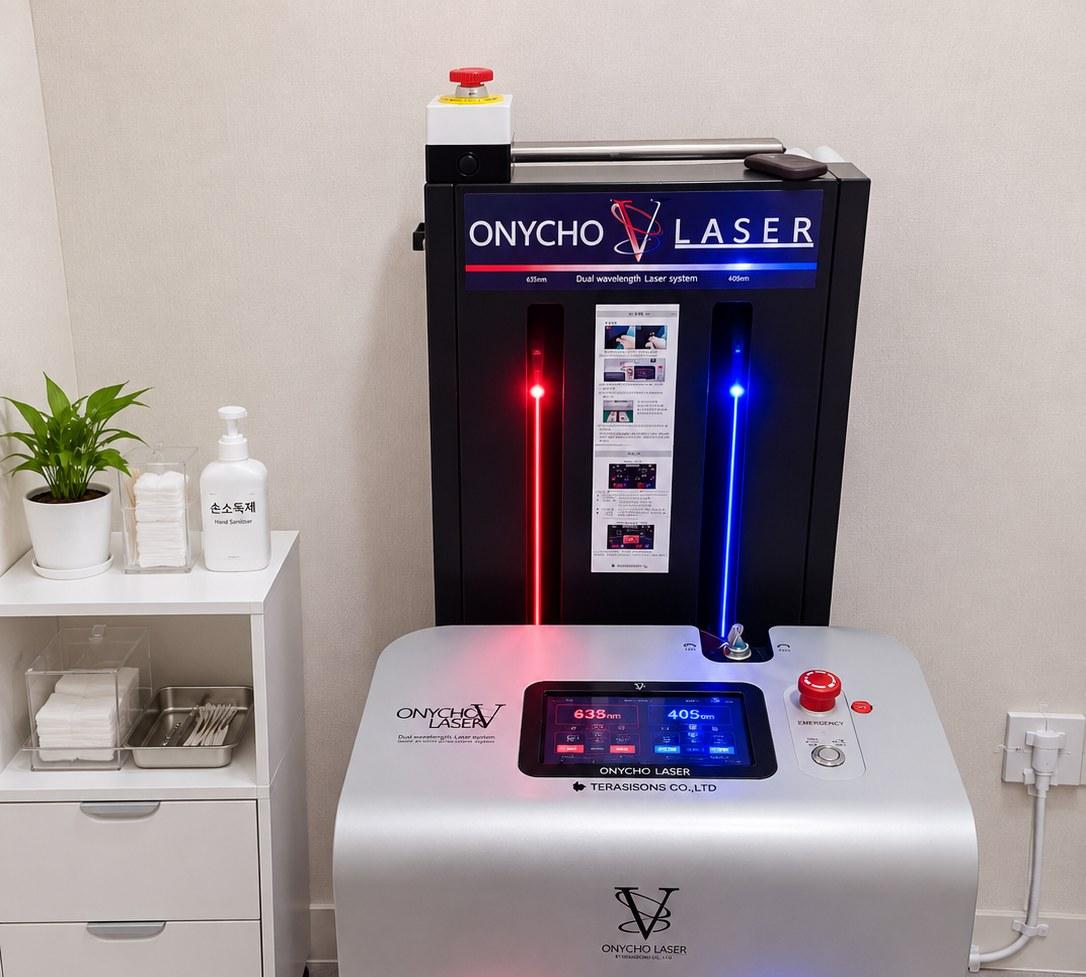
Onycho laser device
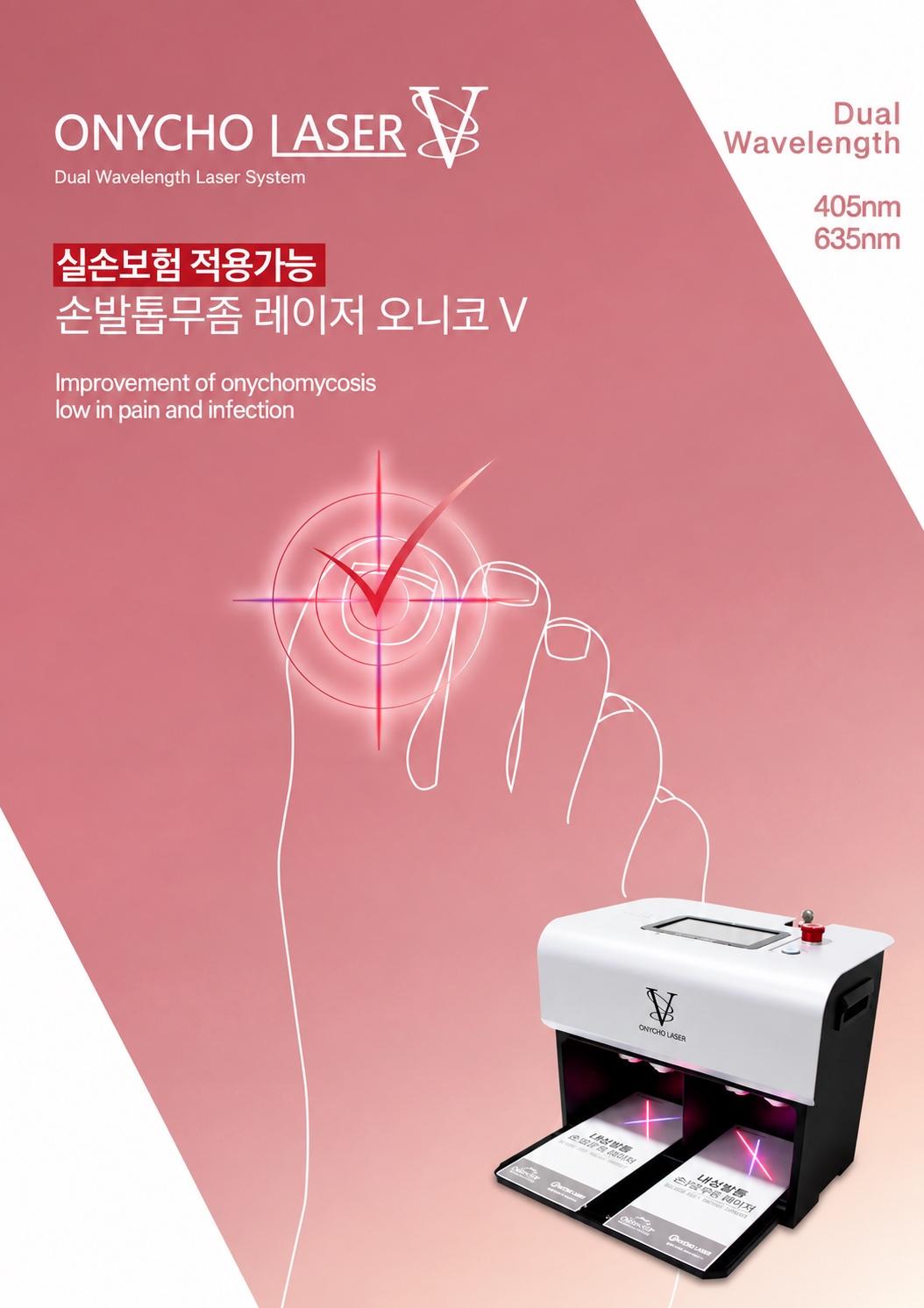
Onycho laser brochure
Caring for fungal toenails
The earlier nail fungus is managed, the faster it can improve. Proper care helps you get healthy toenails back.
- 1
Keep feet clean and dry
Wash your feet every day and dry them thoroughly, including between the toes. Avoid shoes or socks that trap sweat, and wear breathable shoes and cotton socks.
- 2
Remove fungal buildup from thick, brittle nails with scaling
When nail fungus makes nails thick and brittle, caring for the surface alone rarely removes the fungus completely. Professional scaling to trim thickened nails and remove fungal buildup inside the nail is the most basic treatment.
- 3
Daily habits to prevent recurrence
Use your own towels, slippers and nail clippers. After using shared facilities such as pools or saunas, wash and dry your feet well. Strengthening immunity and avoiding environments where fungus thrives is important.
Nail fungus: before and after
Results may vary from person to person.
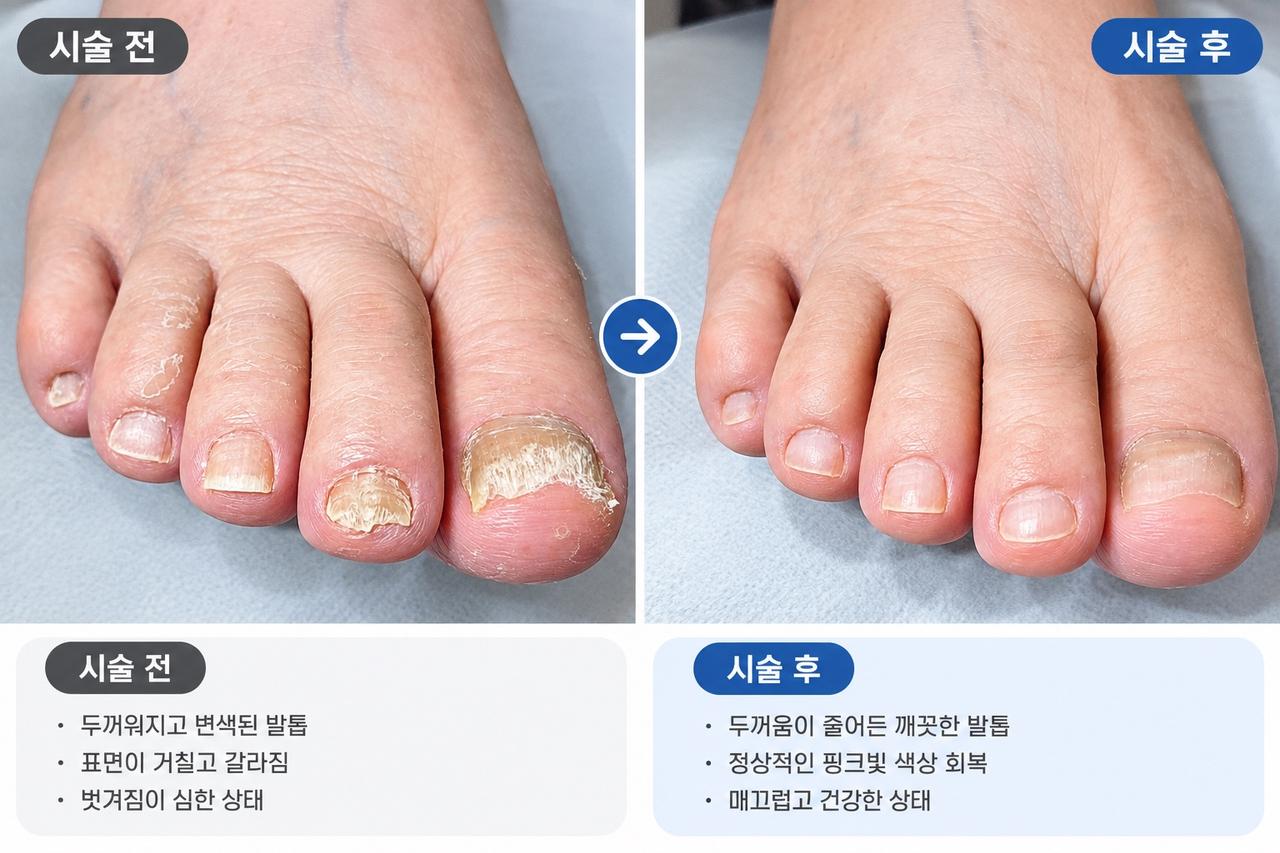
Nail fungus before and after treatment
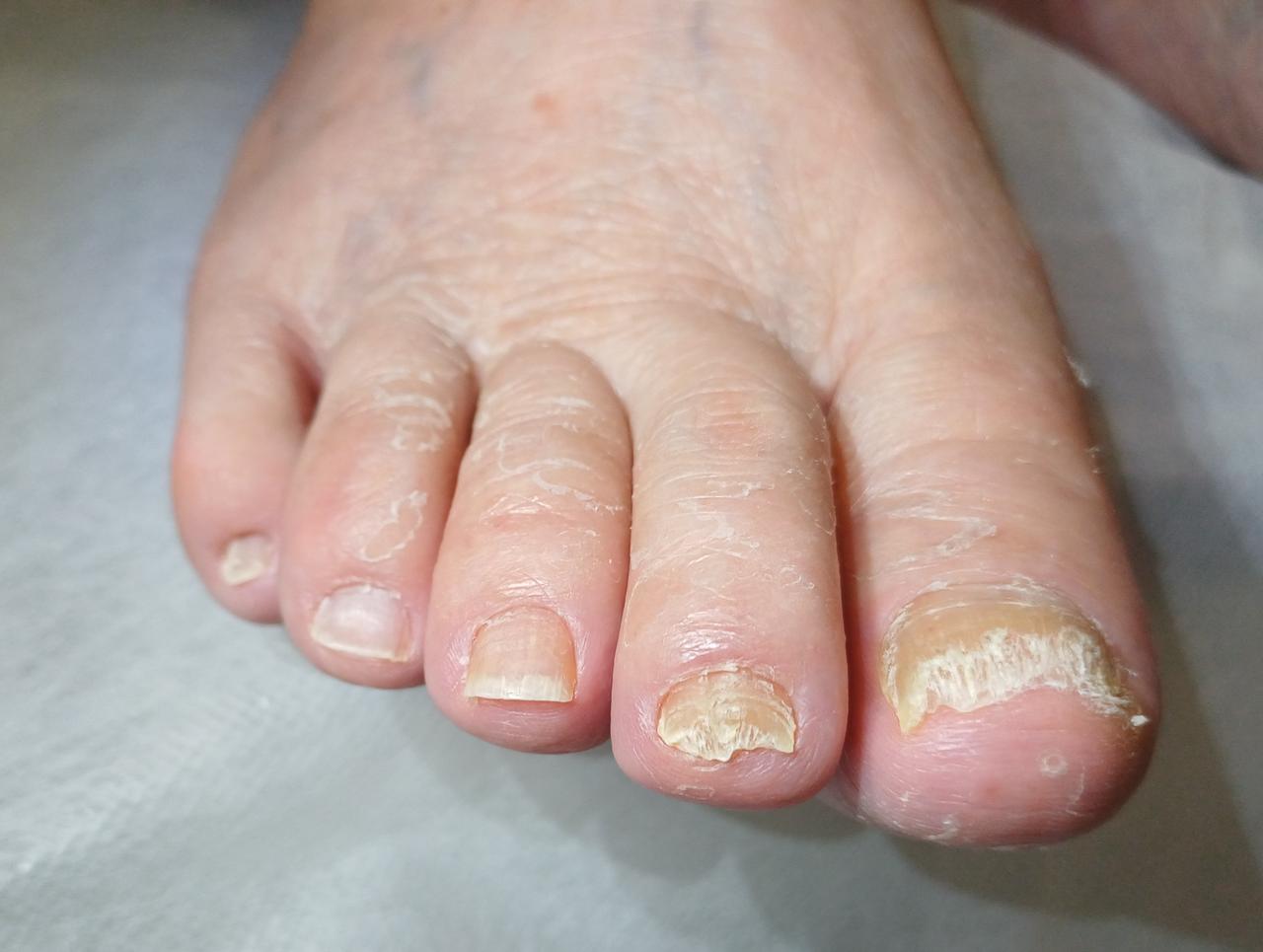
Nail fungus before treatment
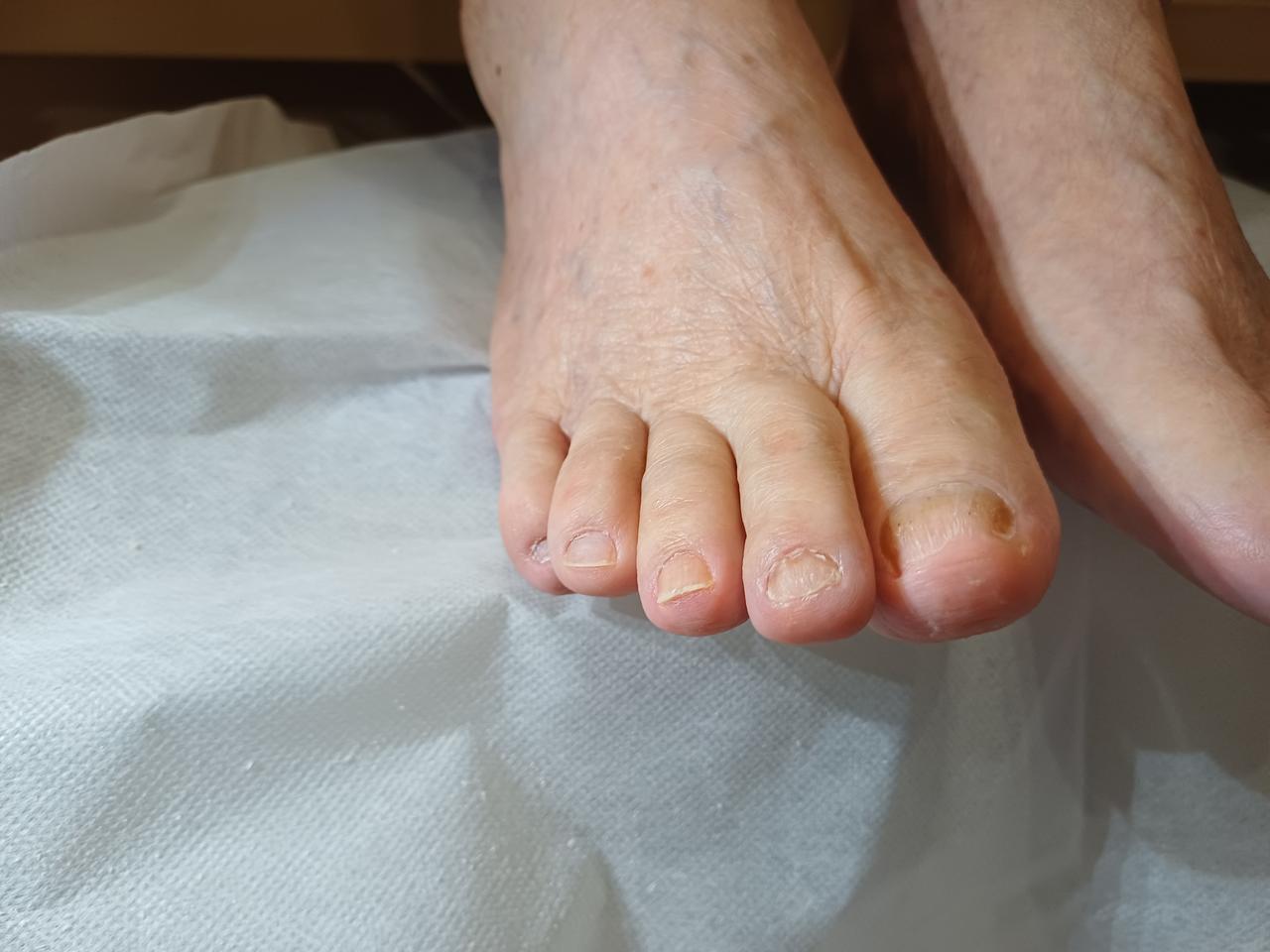
Nail fungus after treatment
FAQ
How is toenail fungus confirmed?
If needed, part of the affected nail or the debris underneath is collected to check for fungus. Microscopy, culture and other tests are used as appropriate, and the results are judged together with the actual condition of the nail. Please tell the doctor about any antifungal medication used before the test.
What treatments are available for toenail fungus?
Topical and oral antifungal medications are the main options. For thick nails, a procedure to reduce thickness may be added depending on the condition. One method or a combination is used according to the extent of infection and your health.
If I have laser treatment for toenail fungus, can I skip the pills?
Having laser treatment does not mean everyone can skip medication. Evidence and indications differ by device and method, and laser alone cannot be guaranteed to clear the fungus or cure it. Treatment is discussed after checking why medication is difficult for you and how extensive the infection is.
How long does toenail fungus treatment take?
The period of medication and the time for a clear nail to grow out are different. Toenails grow slowly, so it can take several months to more than a year for the appearance to recover. The period varies with the extent of infection, nail growth rate and treatment method.
Can toenail fungus spread to family members?
It can spread through objects or surroundings contaminated with fungus. Nail clippers, foot care tools and slippers are best used individually rather than shared. If a family member develops similar changes, we recommend checking for fungus.
Related care information
Explore fungal nail care and other nail clinic guidance.

Nail clinic overview
We distinguish ingrown nails, thickening or discoloration, and recurrent inflammation before discussing care.

Nail treatment
Care proceeds through examination, cause assessment, indicated testing, individual treatment, and recurrence prevention

Nail FAQ
Not every thick nail is fungal, and an ingrown nail does not always require removal
Discuss the approach that fits your condition
Discuss the potential benefits and limitations before deciding on a care plan.
When it hurts, Dr. Anapa
Face or pain, we start by finding out why. Book by phone or online.