
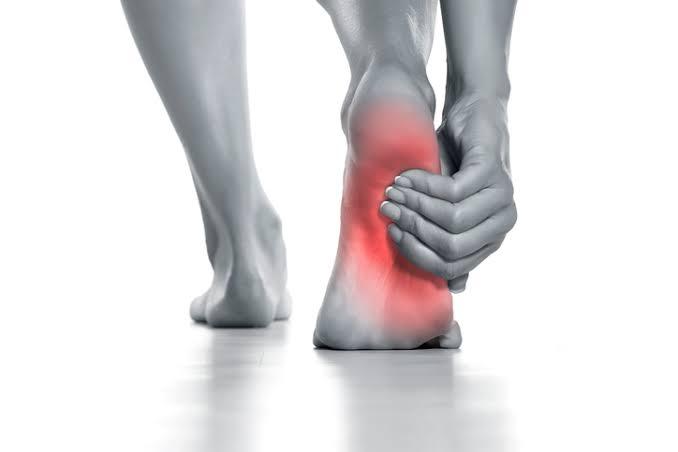
Why Plantar Fasciitis Keeps Coming Back When Only the Sole Is Treated
Posture and body balance through the lens of 25 years of pain care. I am a board-certified anesthesiology and pain medicine specialist and have treated pain patients for about 25 years.
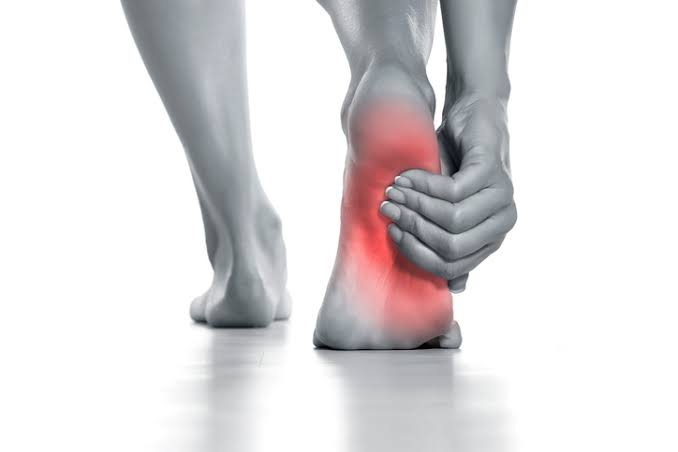
Posture and body balance through the lens of 25 years of pain care Hello. I'm Dr. Ahn Jae-seok of Seoul Cheongdam Dr. Anapa Clinic. I am a board-certified anesthesiology and pain medicine specialist and have treated pain patients for about 25 years. Having seen countless patients with headaches, neck and shoulder pain, low back pain, knee pain, calf pain, ankle pain, and foot pain, there's one thing I've come to consider especially important.
It's this: "Don't look only at the painful spot—find out why that area keeps being overloaded." Today I'd like to talk about one very common example: plantar fasciitis and heel and sole pain.
Does your heel hurt with your first steps in the morning? The plantar fascia is a thick band of fibrous tissue running from the heel bone toward the toes. It supports the arch of the foot and absorbs shock when you walk or run.
When the plantar fascia is repeatedly overloaded, pain can develop on the inner side of the heel or the sole. In particular, · it hurts with your first steps after getting up in the morning · it hurts when you stand up after sitting for a long time
· the heel starts hurting again after standing or walking for a long time — these are typical symptoms. But there's an important question here: "Why does my sole keep getting overloaded?"
I don't look only at the sole If you assume sole pain is caused only by the sole itself, treatment may keep repeating. Over 25 years of treating pain patients, what I've watched closely is the body's left-right and front-back balance.
For example, people who habitually sit for long periods with their weight on one buttock are prone to having the trunk and pelvis tilt to one side. This can create constant tension in the erector spinae and muscles around the pelvis on the same side, and change the way the leg muscles are used.
As a result, I commonly see in clinical practice a chain of tension through the thigh, shin, calf, ankle, and sole, or more weight being placed on one foot. This doesn't mean it is the single cause that applies to every plantar fasciitis patient.
But in my clinical view, posture and weight distribution must be examined when looking for why one foot is repeatedly overloaded.
Are your calves always tight? When I see plantar fasciitis patients, I check tension in the calves and lower body as well as the sole. Excessive tension in the calf muscles can affect ankle movement and gait patterns.
In particular, if the following symptoms occur together on one side only, the balance of the whole body should be examined. · One side of the lower back often feels stiff · The knee on the same side also hurts · The shin feels tight
· The calf often knots up · You get leg cramps at night · Only one heel or sole hurts repeatedly In these cases, rather than viewing each as a separate condition, I check whether they are connected manifestations of a single weight-bearing pattern.
What matters in treating plantar fasciitis is "why the load is concentrated on that foot" In general, plantar fasciitis can be influenced by activity level, foot shape, gait, body weight, footwear, repetitive impact, and more.
So treatment aimed only at the sole is sometimes not enough. During an exam, I look at the following as well.
- Left-right weight distribution
I check which buttock you put more weight on when sitting.
- Left-right erector spinae tension
I check whether the erector muscles on one side are constantly tense from the lower back up to the neck.
- Pelvic and leg muscle tension
I look at which side of the thigh, shin, and calf is tenser.
- Weight shift when standing and walking
I check which foot your weight stays on longer.
- Problems with the foot itself
Flat feet, high arches, foot deformities, and footwear issues also need to be checked.
The goal of treatment isn't just eliminating pain When pain is severe, several approaches may be considered depending on the patient's condition, such as medication, physical therapy, and injection treatment. In my practice, when excessive nerve and muscle tension is observed in specific areas around the spine, I have seen patients whose leg muscle tension and pain eased quickly after appropriate nerve block treatment.
However, the injection itself is not the end goal. Finding out why this patient kept putting weight on the same foot and changing that posture—I believe that's what matters in reducing recurrence.
What I emphasize most to patients I believe the final stage of pain treatment is posture education. A body that has been used incorrectly for a long time won't have its daily habits changed automatically by a few sessions in the treatment room.
So I explain, according to each patient's condition, · how to distribute weight between left and right when sitting · how to reduce the habit of leaning the upper body forward · how to avoid leaning on one leg when standing · exercises to restore front-back spinal balance · how to make use of walking and running
In the end, patients need to understand their own posture and be able to correct it themselves.
Other conditions must be ruled out Not all heel and sole pain is plantar fasciitis. Achilles tendon disorders, nerve compression, fractures, and joint conditions can also cause foot and heel pain.
If severe pain comes on suddenly, the foot becomes swollen and red, you can't bear weight after an injury, or you have reduced sensation, an accurate diagnosis comes first.
Plantar fasciitis: don't look only at the sole The foot sits at the very bottom of the body, yet it bears the body's entire weight. So when sole pain keeps recurring, here's the question I ask. Before "What treatment should we do on the sole?" we first need to find out "Why does this foot keep getting overloaded?"
Looking at the connections across the whole body—from the sole to the calf, knee, pelvis, and spine—and finding and correcting faulty posture. That is the principle of pain treatment I've come to value over 25 years of treating pain patients.
FAQ Q. If it hurts a lot only with my first steps in the morning, is that plantar fasciitis? That is one of the common symptoms of plantar fasciitis. But other heel conditions are possible, so if it keeps happening, it's a good idea to see a doctor.
Q. Is frequent calf tightness related to plantar fasciitis? The load on the ankle and foot is related to the movement of the calf and the entire leg. That's why the calf and gait pattern should also be examined during treatment.
Q. Why does only one foot keep hurting? Many factors can be involved, including not only the structure of the foot but also gait, pelvic alignment, and left-right weight-bearing habits. I pay particular attention to whether you have daily habits of putting weight on one side.
Q. Once the pain goes away, is treatment over? Reduced pain doesn't mean your existing posture and weight-bearing habits have been corrected. If the pain keeps coming back, it's important to also correct the lifestyle habits and posture behind it.
Plantar fasciitis: care you can do at home for prevention Everyday care is as important as treatment. Along with correcting posture and weight-bearing habits in the clinic, here are two methods that help when done consistently at home.
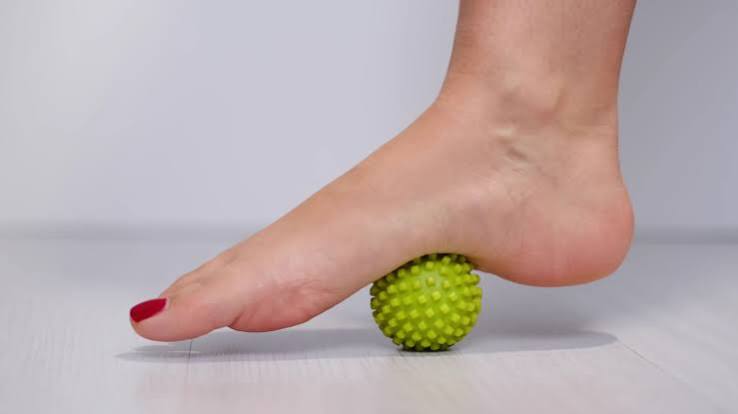
- Releasing the plantar fascia with a massage ball (tennis ball)
The plantar fascia supports your body weight all day and is repeatedly put under tension. That makes regular release all the more important.
-
Place a tennis ball or massage ball on the floor, press gently with the sole of your foot, and roll it back and forth.
-
Roll evenly over the whole area, from the heel to the ball of the foot under the toes.
-
When you find a particularly sore spot, press gently there for about 10–15 seconds, then roll again, and repeat.
-
Do this for 5–10 minutes a day on both feet, at an intensity that doesn't cause much pain.
-
Gently loosening your feet in bed before getting up in the morning can also help.
However, if the foot is acutely and severely swollen or the pain is very intense, I recommend seeing a doctor first rather than pressing hard.
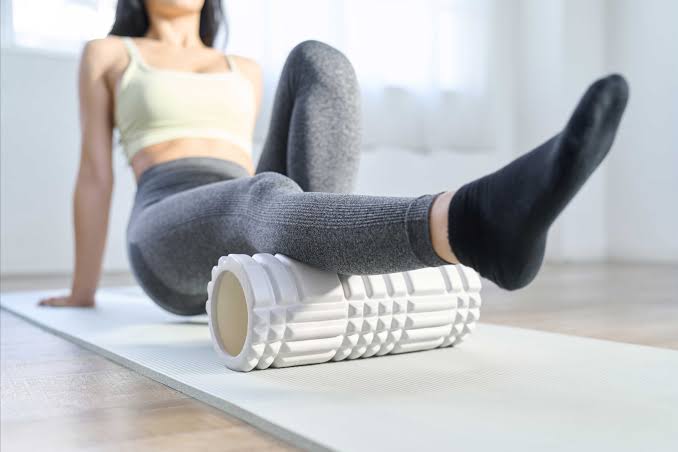
- Releasing the calf muscles with a foam roller
As I mentioned earlier, calf tension affects ankle movement and gait patterns, which in turn can add to the load on the plantar fascia. So the calves deserve as much attention as the soles.
-
Place a foam roller on the floor, rest your calf on it, and slowly roll back and forth while supporting your body with your hands.
-
Alternate between the inner, outer, and middle parts of the calf.
-
At spots that feel especially knotted or tender, pause and press gently.
-
Spend 1–2 minutes per side, alternating left and right.
-
If you habitually put more weight on one leg, the calf on that side is often tighter, so comparing the two sides can also help.
Consistency is key This kind of self-care is less a treatment that eliminates the root cause of pain than a supportive way to reduce recurring tension and prevent recurrence. If you stand or walk a lot, it's especially good to do it consistently at the end of the day, even briefly.
Of course, if the pain has already progressed considerably, self-care alone may have limits, so as I mentioned, you need an exam that also looks for why that foot keeps being overloaded.
Seoul Cheongdam Dr. Anapa Clinic

Dr. Ahn Jae-seok, board-certified anesthesiology and pain medicine specialist ※ This article provides general health information; individual diagnosis and treatment may differ depending on symptoms, examination, and test results. #PlantarFasciitis #FootPain #HeelPain #CalfPain #AnklePain #LegCramps #PostureCorrection #BodyAlignment #PainTreatment #AnesthesiologyAndPainMedicine #SeoulCheongdamDrAnapaClinic #DrJasonAhn
When it hurts, Dr. Anapa
Face or pain, we start by finding out why. Book by phone or online.