
Why Wrist and Forearm Pain Keeps Coming Back on One Side, and Why Treating the Wrist Alone May Not Be Enough
How the neck, forearm muscles and posture connect, seen through 25 years of pain treatment. When the wrist hurts, most people assume the problem is in the wrist itself.
How the neck, forearm muscles and posture connect, seen through 25 years of pain treatment. Hello, I'm Dr. Ahn Jae-seok of Seoul Cheongdam Dr. Anapa Clinic. When the wrist hurts, most people assume the problem is in the wrist itself. Of course, wrist pain has many possible causes, including sprains or fractures, tendinitis from repetitive use, arthritis and carpal tunnel syndrome. That's why an accurate diagnosis comes first.
In practice, however, I meet patients whose pain doesn't improve easily when only the wrist is treated, or who get better and then see it come back again. In these cases, I don't look at the wrist alone.
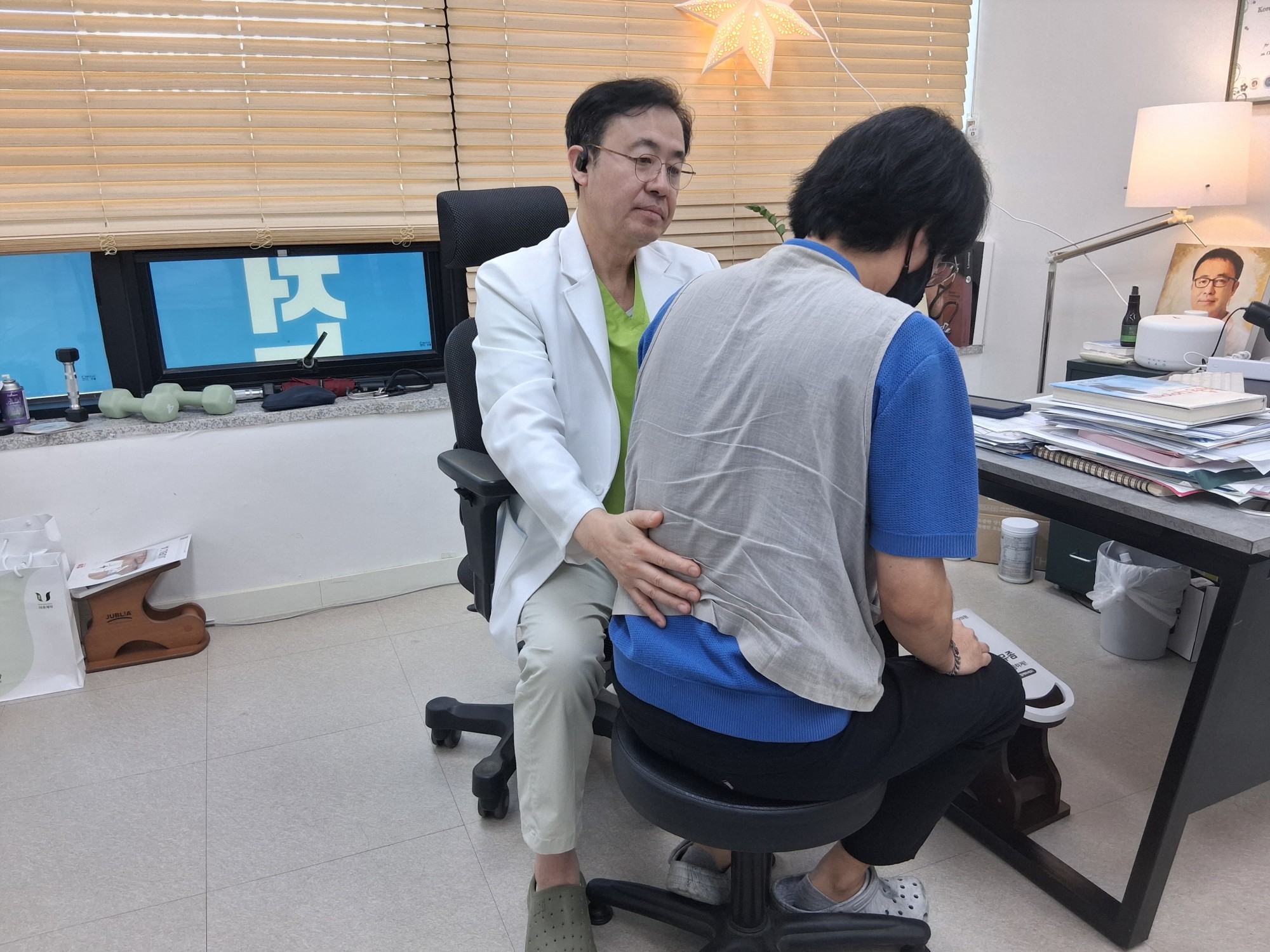
We assess the patient's posture as a whole
■ Where Are the Forearm Muscles, the Muscles That Move the Wrist?
Many of the muscles that move the fingers and wrist are not located in the wrist itself but between the elbow and the wrist, in the forearm. That's why people who use their hands a lot often have stiff, tense forearm muscles.
In fact, when I press on a patient's forearm muscles, it's not unusual to hear, "That really hurts." And when I examine these patients a little further up, I often find that the shoulder and neck on the same side are tight and tense as well.
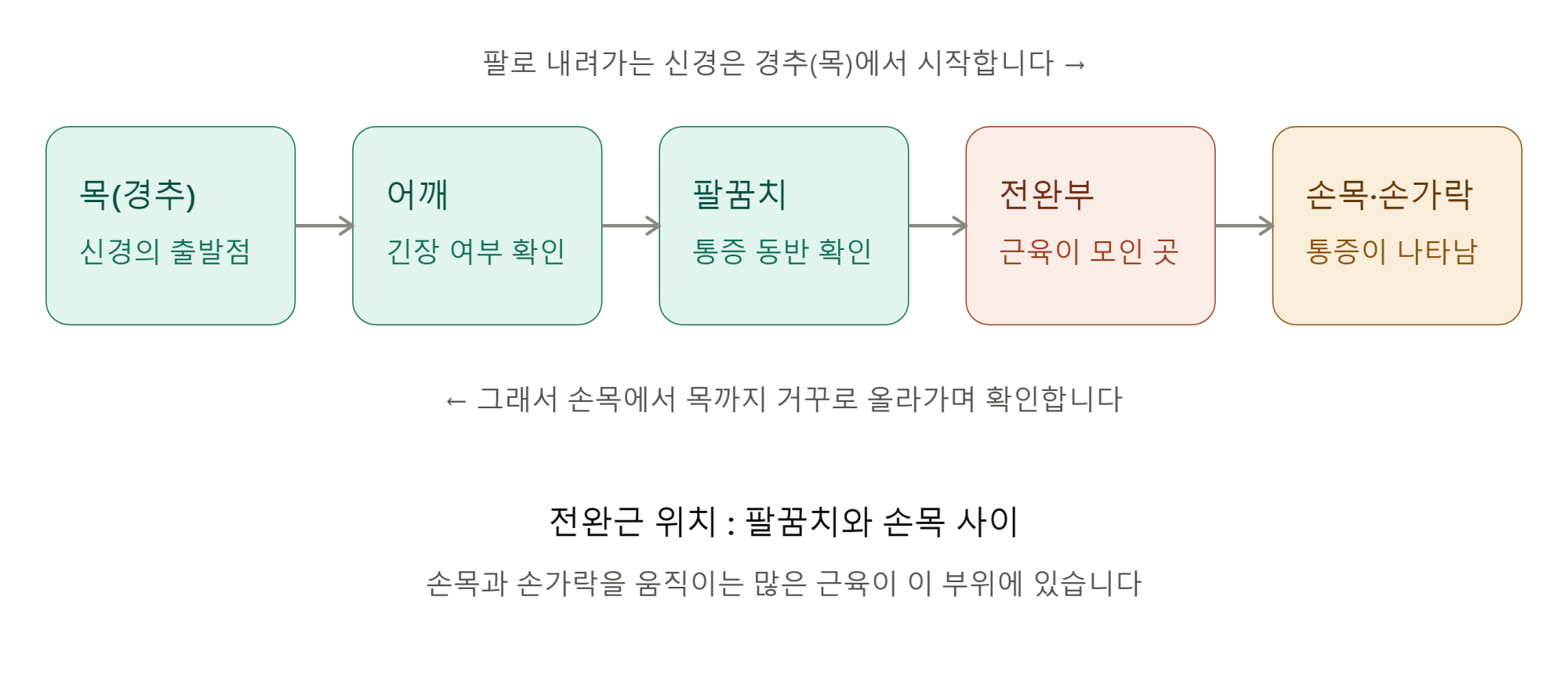
■ I Trace the Path Back Up from the Wrist to the Neck
The nerves that run down the arm start from the cervical spine. So for patients with wrist pain, I check the following together.
- Which wrist hurts?
- Are the forearm muscles on the same side knotted?
- Does the elbow hurt as well?
- Do the shoulder and neck often feel stiff?
- Is there a left and right difference in the tension of the erector spinae muscles around the cervical spine?
- When sitting, which side of the buttocks do you usually put your weight on?
In particular, if a patient feels discomfort in the wrist, elbow, shoulder and neck all on the same side, I pay close attention to the left and right balance of the whole body.
■ What Does Sitting on One Side of the Buttocks for a Long Time Have to Do with the Wrist?
One of the things I have repeatedly observed over 25 years of treating pain patients is the habit of shifting body weight to one side. When you sit for a long time with your weight on one side of the buttocks, a pattern can develop in which the muscles around the spine on the same side stay tense to hold the torso upright.
Add computer, mouse and smartphone use on top of this, and the neck, shoulder, arm and forearm can remain tense continuously. I don't see such cases simply as "pain from using the wrist too much."
I also look for the cause further up, to find out why the forearm muscles on one side keep tensing.
■ The Goal of Treatment Is Not Just to Ease Wrist Pain for a While
When needed, I treat the wrist itself while also assessing muscle and nerve tension in the neck and around the spine. In my practice, with certain patients, when I treat the overly tense areas around the spine and the related nerve sites, I see the tension in the forearm muscles ease quickly, and the wrist and elbow pain improve together.
However, this does not mean that the cause of all wrist pain lies in the cervical spine. It is important to distinguish between conditions of the wrist itself and problems in how the whole upper limb is connected.
■ Ultimately, Posture Has to Change to Reduce Recurrence
If the following habits continue even after treatment, the same problem can come back.
- Constantly pushing your head forward
- Sitting while leaning on one side of the buttocks
- Rounding your shoulders
- Using a mouse and smartphone with the same hand all day
That's why I help each patient find their own left and right balance, and I also teach sitting posture, monitor height, shoulder and neck position, and exercises.
In my view, the ultimate goal of pain treatment is not to get treated every time pain appears, but for patients to change the posture that causes the pain themselves. Watch this video to learn Dr. Ahn Jae-seok's correct sitting posture and exercises.
■ For This Kind of Wrist Pain, an Accurate Examination Comes First
In the following cases, you should not assume it is simple muscle pain.
- It hurts badly after a fall or a bump
- There is swelling or deformity
- Numbness or reduced sensation extends to the fingers
- Your grip keeps getting weaker
- Pain and swelling get worse even after several days
Because wrist pain has many possible causes, an accurate diagnosis is important.
■ Frequently Asked Questions
Q. If my wrist hurts, should my neck be examined too? A. Not in every case. However, if the elbow, shoulder and neck on the same side are repeatedly uncomfortable along with the wrist, the whole upper limb needs to be assessed together.
Q. Can stiff forearm muscles cause wrist pain? A. Since many of the muscles that move the wrist and fingers are in the forearm, repetitive use and forearm muscle tension can affect the wrist. Q. Can correcting my posture reduce recurrence?
A. For patients whose pain involves repetitive use and postural imbalance, it is important to change the work environment and posture along with treatment.
If wrist pain keeps coming back and you're in Dasan New Town, Namyangju, don't put up with it alone. Feel free to consult us by phone (031-8088-8030) or through the "Book" button on our website (www.drahnapa.com).
※ This content is intended to provide general medical information, and the appropriate diagnosis and treatment may vary depending on each person's condition.

Dr. Ahn Jae-seok, Medical Director, Board-certified anesthesiologist and pain medicine specialist
- Completed residency in Anesthesiology and Pain Medicine at Seoul National University Hospital
- Fellow, Pain Center, Seoul National University Hospital
- Founding member and former General Secretary, Korean Society of IMS
- Former Scientific Director, Korean Society of Obesity and Body Contouring
- Former Scientific Director, Korean Society of Mesotherapy
■ Clinic Hours
- Weekdays: 09:00 ~ 18:00 (lunch break 13:00 ~ 14:00)
- Sunday: 11:00 ~ 17:00 (open without breaks)
- Saturday: Closed
■ Directions
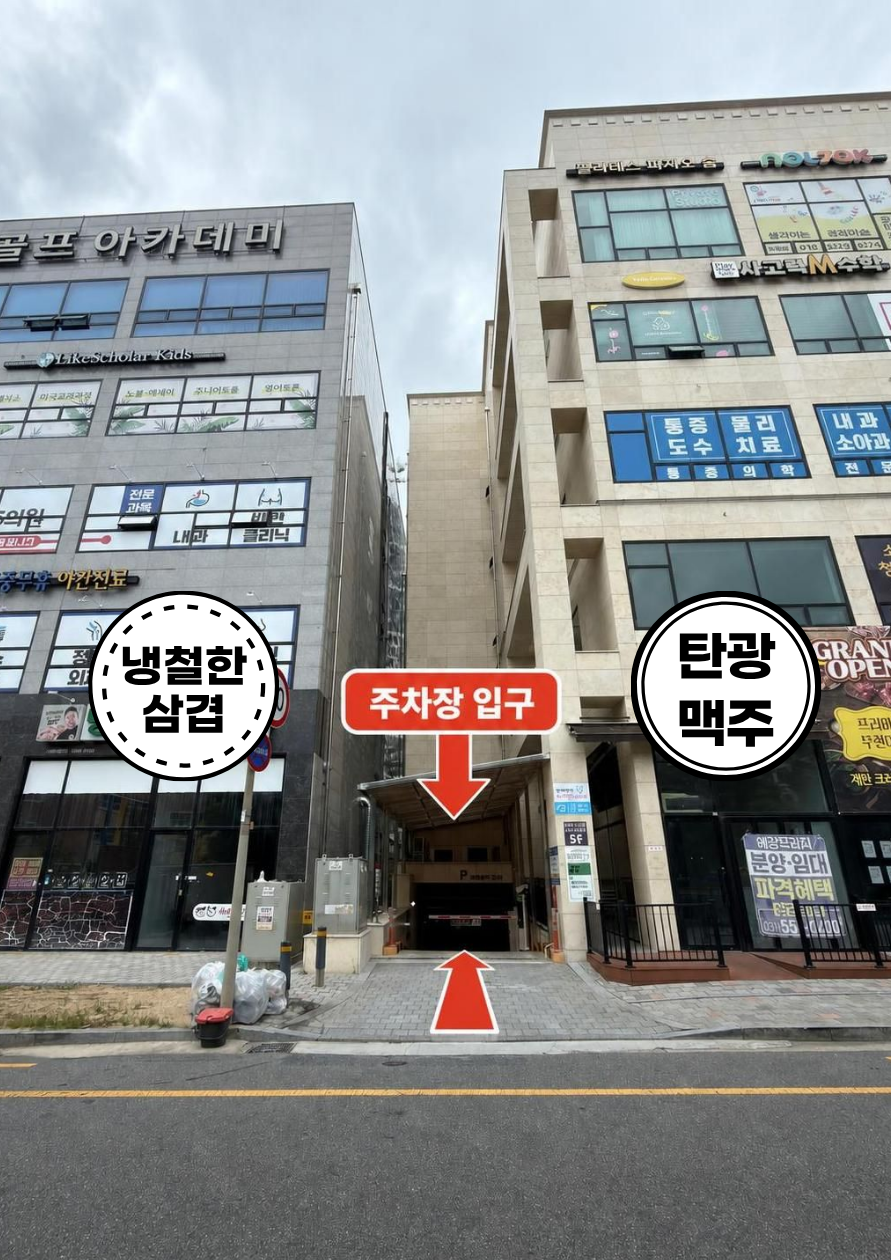
3F, 80 Dasanjungang-ro 82beon-gil, Namyangju-si, Gyeonggi-do (Haegang Plaza, in front of Central Complex 6 and Dasan Kkotdabi Kindergarten) Phone: 031-8088-8030 The underground parking entrance is at the back of the building. If you use T map, search for "Seoul Cheongdam Dr. Anapa Clinic" as your destination and add "Gaun Intersection" as a waypoint for an easier route from Gangbyeonbuk-ro.
When it hurts, Dr. Anapa
Face or pain, we start by finding out why. Book by phone or online.