
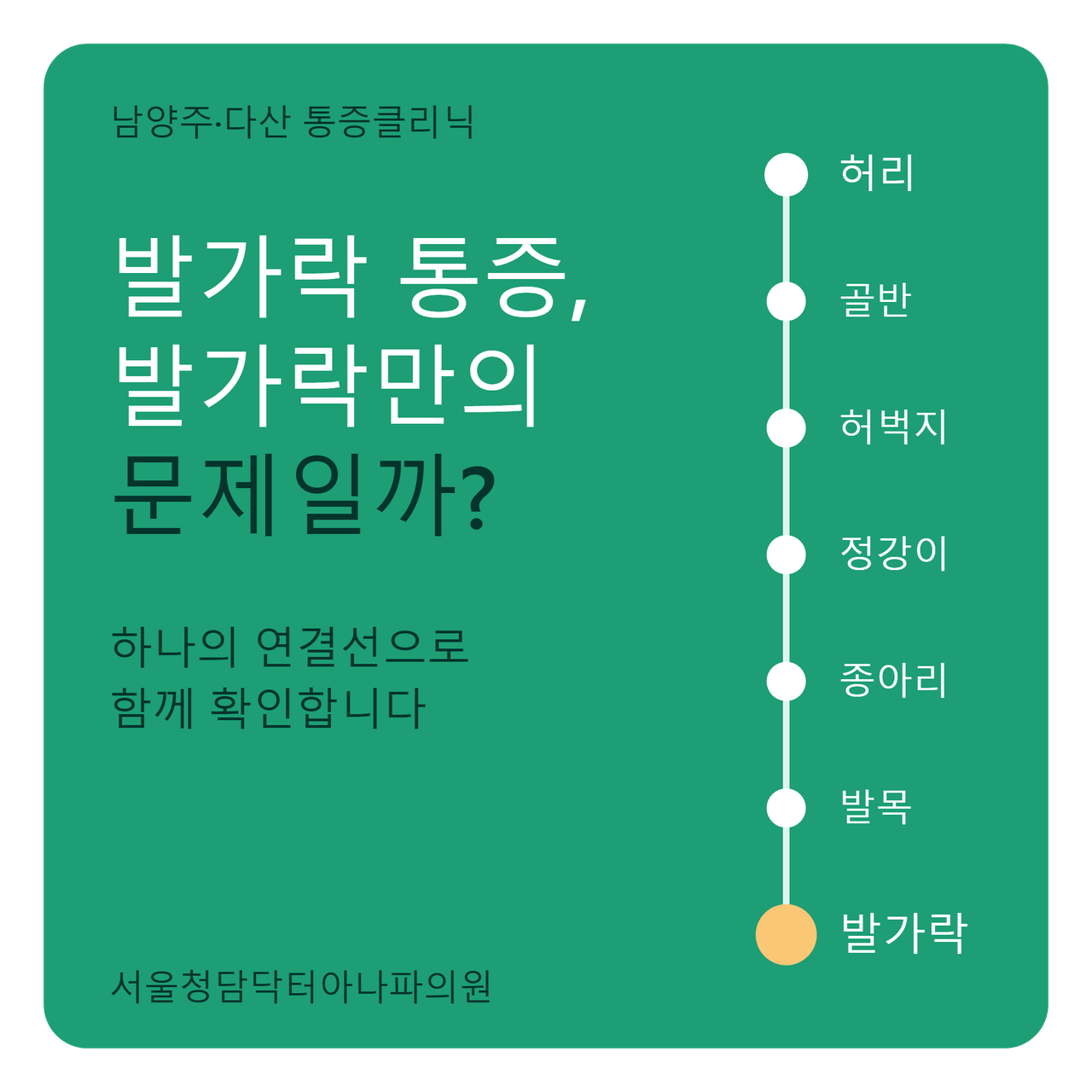
Toe Pain on One Side May Not Be a Problem of the Toes Alone
Why the balance of the lower back, pelvis and legs matters all the way to the toes. When a toe hurts, most people first wonder whether it is their shoes, arthritis or the toe itself.
Why the balance of the lower back, pelvis and legs matters all the way to the toes. Hello, I'm Dr. Ahn Jae-seok of Seoul Cheongdam Dr. Anapa Clinic. When a toe hurts, most people first wonder whether it is their shoes, arthritis or the toe itself.
In fact, toe pain has many possible causes. Shoes that are too tight, repetitive exercise, ingrown toenails, bunions (hallux valgus), sprains and fractures, and gout can all cause toe pain. So having toe pain doesn't automatically mean it's caused by posture.
But over 25 years of treating pain patients, I have also seen many cases of pain that doesn't get better when only the toe is treated. In particular, if you have pain in the toes on one side together with the symptoms below, it's worth looking above the toes as well.
- The ankle on the same side feels uncomfortable
- The calf often gets tight
- You get leg cramps
- The knee hurts
- Stiffness extends to one side of the lower back
■ The Feet Are Where the Body's Weight Finally Lands
When we stand or walk, body weight is passed through the pelvis and legs all the way to the toes. So if the left and right weight distribution changes, the load the feet carry inevitably changes too. For example, if you keep a habit of standing with most of your weight on one leg, or always leaning on one side of your buttocks when sitting, the movement pattern of the whole body can become asymmetrical.
As a result, the load can repeatedly concentrate on a particular foot and a particular toe when you walk. With these patients, I don't simply ask, "Which toe hurts?" I also look at, "Why does weight keep landing on that toe?"
■ The Lower Back and the Toes Are Not as Far Apart as You Might Think
The nerves that come out of the lower back run down the legs to the feet and toes. The lower back, pelvis, thighs, shins and calves also affect one another during walking. One pattern I often observe in clinical practice is that patients with severe tension in the erector spinae muscles on one side and around the pelvis also show muscle tension in the thigh, shin and calf on the same side.
And when this state continues for a long time, the way the patient walks can change without them realizing it, and the load may concentrate more on a particular foot. That's why, even for patients with toe pain, I examine the body as one connected line in the order below.
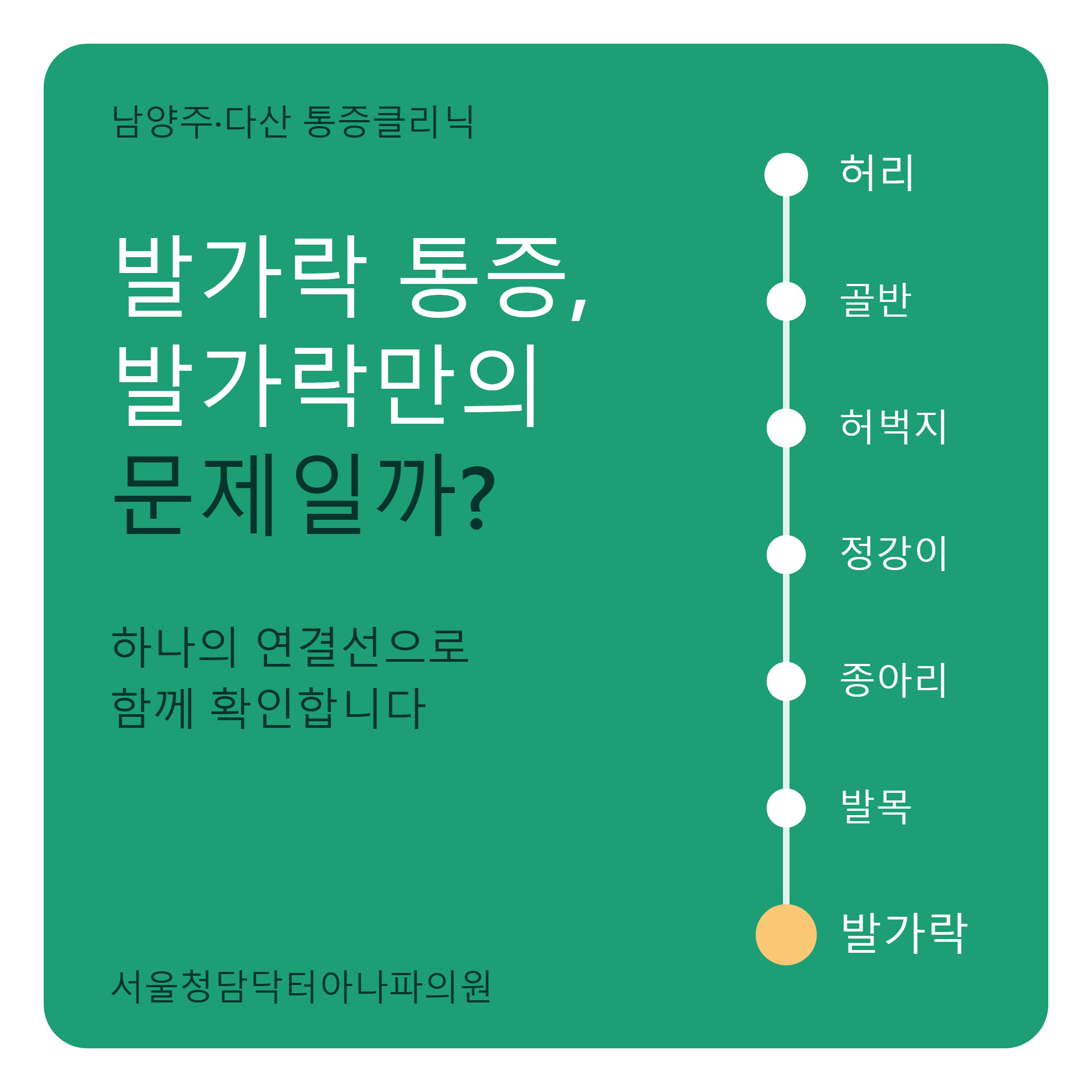
Lower back → Pelvis → Thigh → Shin → Calf → Ankle → Toes
■ What If You Get Leg Cramps and Your Toes Hurt Too?
"I get calf cramps every night." "My toes feel like they're pulling and curling in." "My ankle feels stiff too." Some patients describe it this way. In these cases, rather than looking only at a single toe joint, we need to check the tension in the calf and shin muscles, the walking pattern and any neurological symptoms together.
In particular, if symptoms keep appearing on only one side, it's important to check how the left and right weight distribution differs.
■ The "Sitting on One Side of the Buttocks" Habit I Pay Close Attention To
People today spend a large part of the day sitting. Yet few people are aware of which side of their buttocks they put their weight on. If you keep sitting with your weight on one side of the buttocks, the muscles around the spine can also be used differently on the left and right.
In my clinical experience, in patients who have kept this kind of asymmetrical posture, I commonly see a pattern in which tension in the erector spinae and leg muscles on the same side appears together with pain in the knee, calf, ankle or foot. That's why, rather than treating only the painful foot, I place importance on finding out how the patient sits, stands and walks throughout the day.
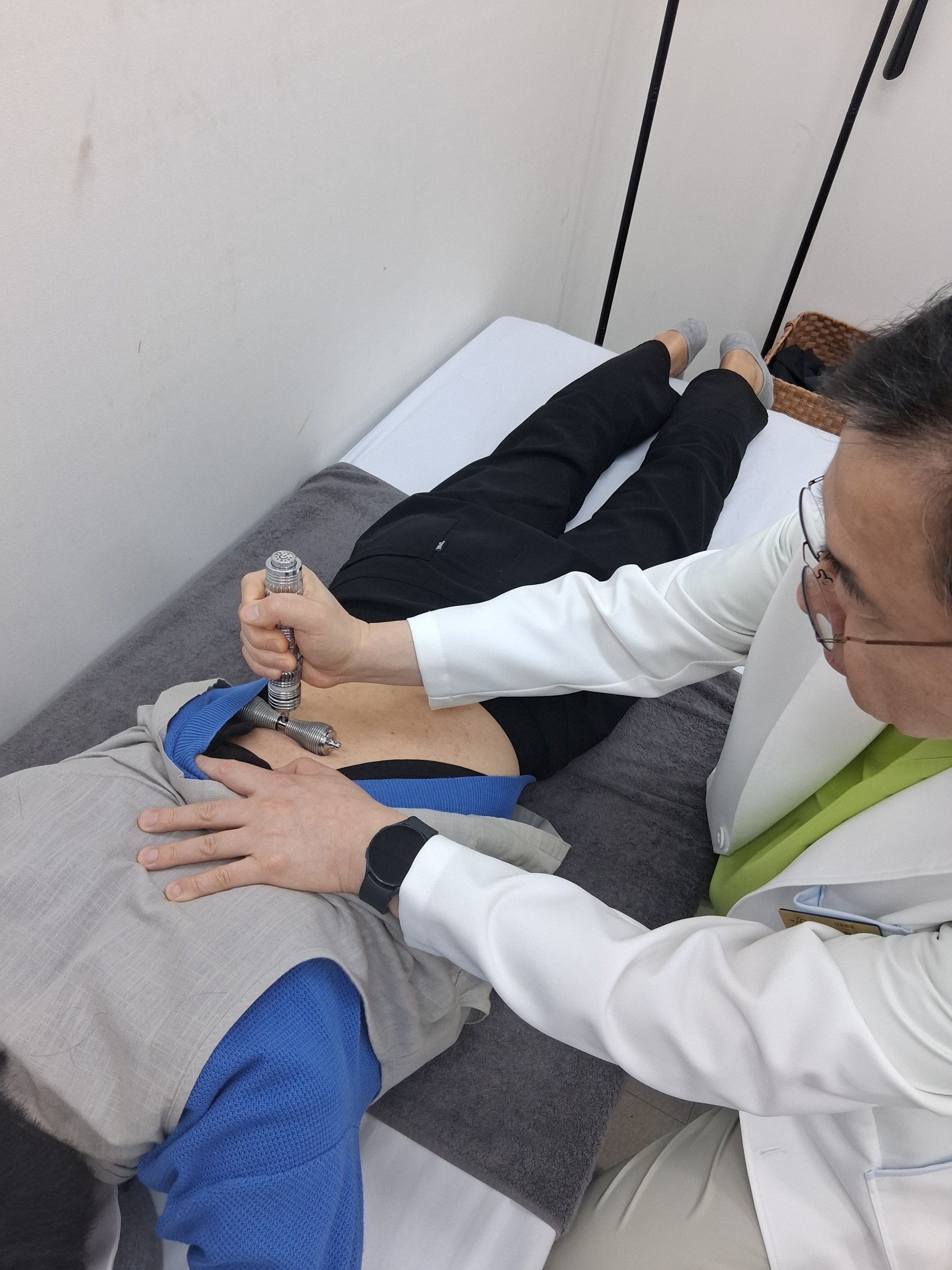
An erector spinae examination using "Dr. EasyHeal" in the exam room
■ If Posture Doesn't Change After Treatment, the Pain Can Return
Depending on the patient's condition, various methods can be used, including medication, physical therapy and injections. For patients in whom excessive tension is found in specific muscles and nerves around the spine, I have seen the tension and pain throughout the legs ease quickly after appropriate treatment such as nerve blocks.
But it shouldn't end there. If you go back to the same posture after the pain eases, the same load pattern can repeat. That's why I consider posture correction and exercise education after treatment essential.
Watch Dr. Ahn Jae-seok's videos on good posture and exercise and follow along.
■ Conditions That Must Be Ruled Out in Toe Pain
Toe pain can appear in a wide range of conditions. The following symptoms in particular call for considering other conditions first.
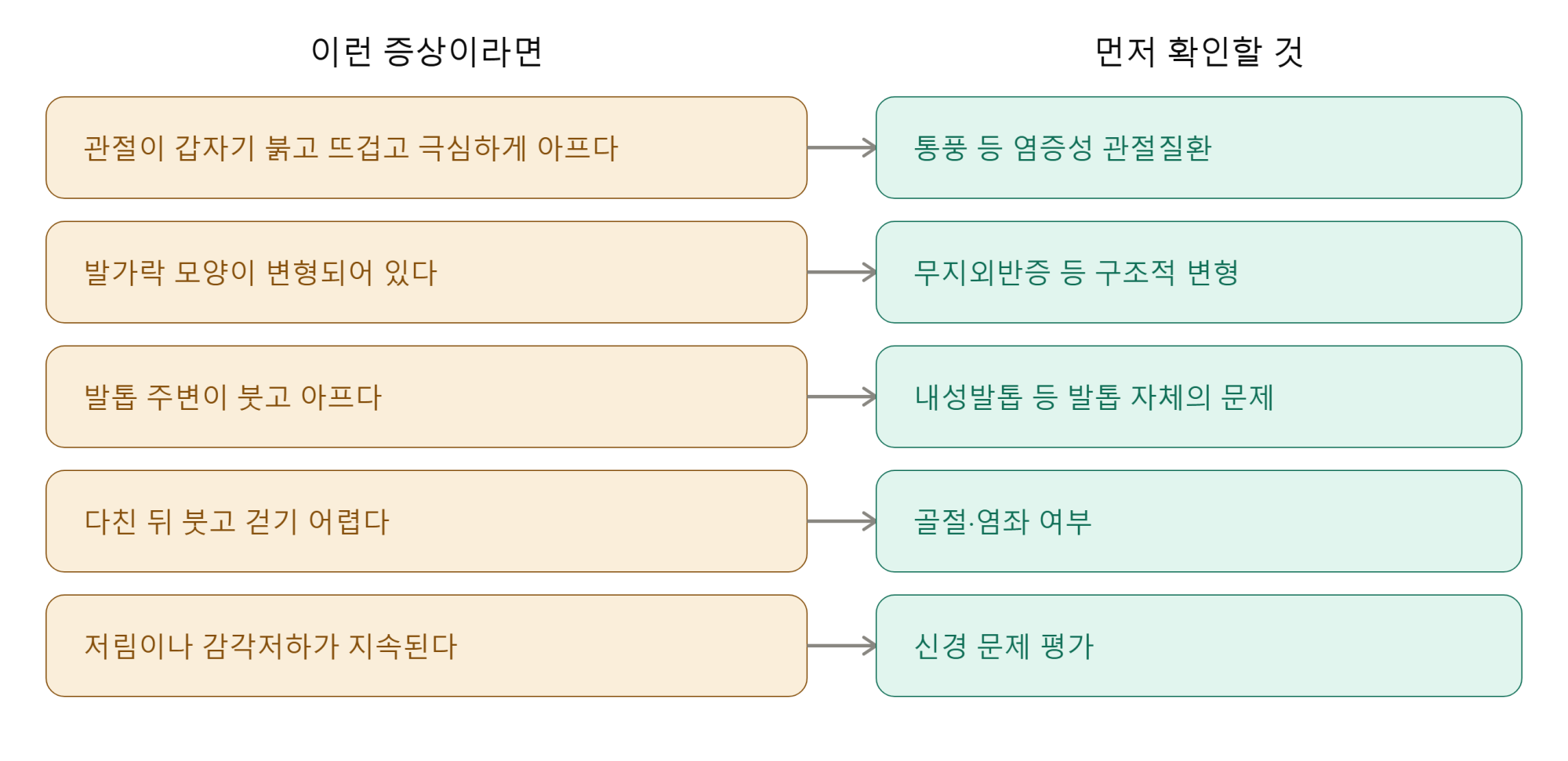
- A toe joint suddenly becomes red, hot and extremely painful → The possibility of an inflammatory joint condition such as gout should be checked.
- The shape of the toe is deformed → Bunions (hallux valgus) or other structural deformities should be checked.
- The area around the toenail is swollen and painful → It may be a problem with the toenail itself, such as an ingrown toenail.
- It is swollen and hard to walk on after an injury → A fracture or sprain should be checked.
- Numbness or reduced sensation persists → An evaluation for nerve problems is needed.
Because toe pain has many possible causes like these, an accurate examination is important.
■ Even When the Tips of Your Toes Hurt, the Whole Body Needs to Be Examined
I often tell my patients, "The place that hurts is not always where the pain starts." If a toe hurts, of course the toe needs to be examined closely. But if the pain keeps coming back, the following also need to be looked at.
- The condition of the lower back and pelvis
- Which side of the buttocks you put your weight on
- Which leg you put more weight on when standing
- Which side's calf and shin are more tense
- Which foot the load concentrates on when walking
What I have considered important over 25 years of treating pain patients is understanding the balance of the whole body before the painful area.
And the final step of treatment is for patients to learn how to maintain correct posture on their own.
■ Frequently Asked Questions
Q. If my toe hurts, do I need a lower back examination? A. Not all toe pain involves a lower back problem. However, if toe pain comes with numbness in one leg, calf tension, or knee or lower back pain, the nerves and the whole lower limb need to be assessed together.
Q. Is there a reason only the toes on one side keep hurting? A. There can be many causes, from problems with shoes or foot structure to walking habits and uneven weight-bearing. If it keeps happening, it's important to find the exact cause.
Q. Are leg cramps and toe pain that occur together related? A. Because the muscles of the calf and foot are functionally connected, they can appear together. However, there are other possible causes such as blood vessel or nerve problems, so if it keeps happening, an examination is needed.
Q. Will correcting my posture cure all toe pain? A. No. Gout, fractures, arthritis, ingrown toenails, bunions (hallux valgus) and similar conditions each need treatment suited to their cause. Posture correction is an important consideration for patients whose pain involves repetitive load or muscle tension.
If toe pain keeps coming back and you're in Dasan New Town, Namyangju, don't put up with it alone. Feel free to consult us by phone (031-8088-8030) or through the "Book" button on our website (www.drahnapa.com).
※ This article is intended to provide health information, and actual diagnosis and treatment may vary depending on the patient's symptoms and examination results.
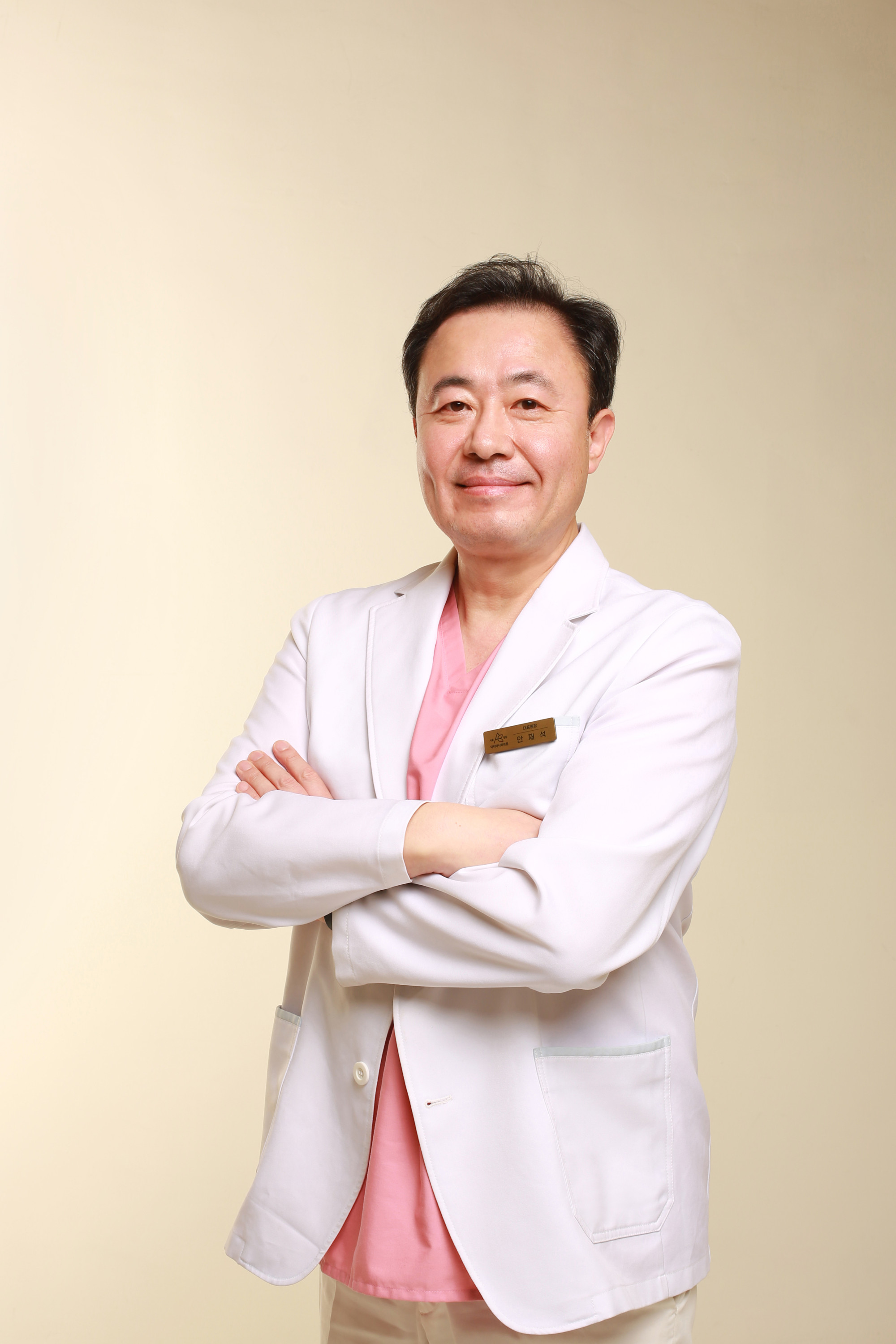
Dr. Ahn Jae-seok, Medical Director, Board-certified anesthesiologist and pain medicine specialist
- Completed residency in Anesthesiology and Pain Medicine at Seoul National University Hospital
- Fellow, Pain Center, Seoul National University Hospital
- Founding member and former General Secretary, Korean Society of IMS
- Former Scientific Director, Korean Society of Obesity and Body Contouring
- Former Scientific Director, Korean Society of Mesotherapy
■ Clinic Hours
- Weekdays: 09:00 ~ 18:00 (lunch break 13:00 ~ 14:00)
- Sunday: 11:00 ~ 17:00 (open without breaks)
- Saturday: Closed
■ Directions
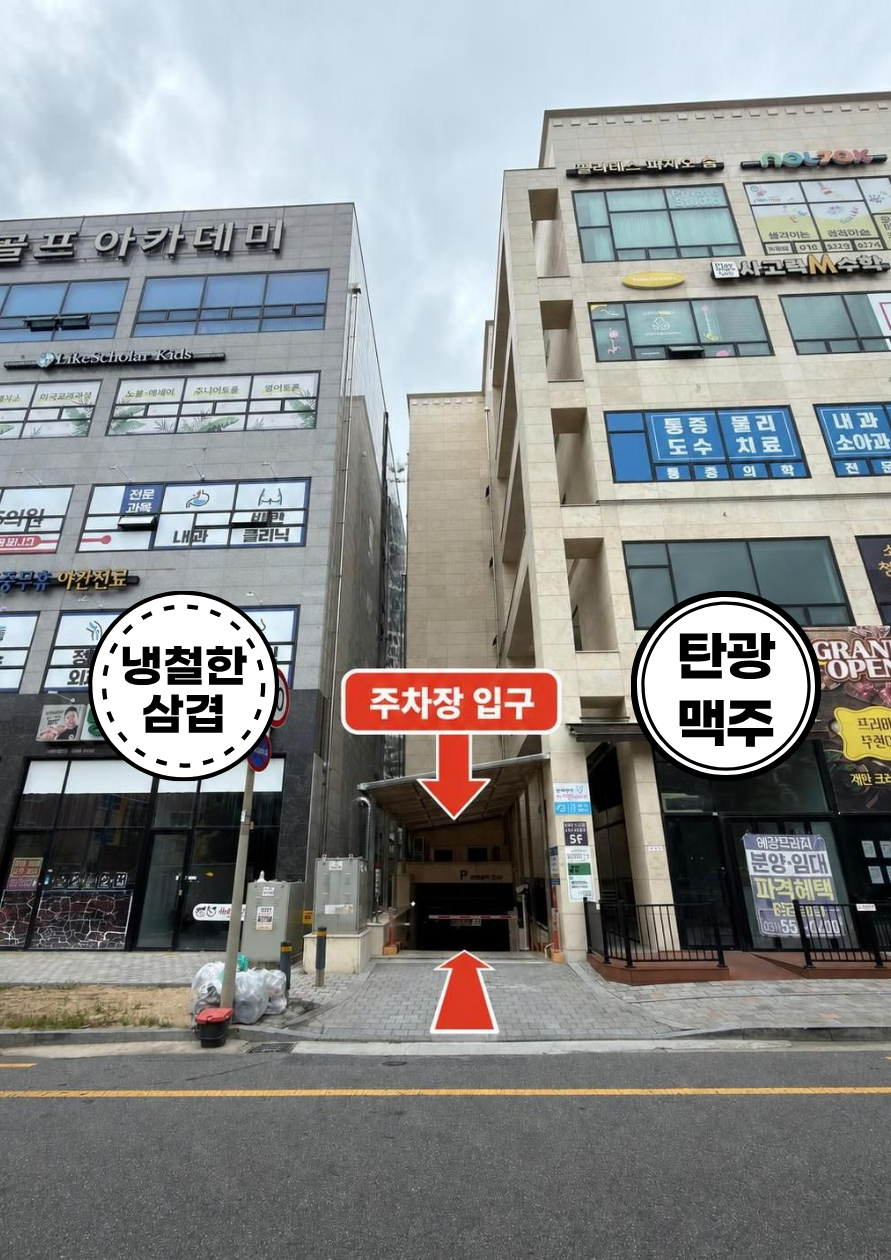
3F, 80 Dasanjungang-ro 82beon-gil, Namyangju-si, Gyeonggi-do (Haegang Plaza, in front of Central Complex 6 and Dasan Kkotdabi Kindergarten) Phone: 031-8088-8030 The underground parking entrance is at the back of the building. If you use T map, search for "Seoul Cheongdam Dr. Anapa Clinic" as your destination and add "Gaun Intersection" as a waypoint for an easier route from Gangbyeonbuk-ro.
When it hurts, Dr. Anapa
Face or pain, we start by finding out why. Book by phone or online.